What Is The Function Of The Serous Membranes Of The Body
What Is The Function Of The Serous Membranes Of The Body. A serous membrane, also called serosa, is a layer of tissue that wraps around organs and helps lubricate them so they don't get rubbed raw. Serous membranes line and enclose several body cavities where they secrete a lubricating fluid which reduces friction from muscle movement.serous membranes are responsible for secreting serous fluids.
Dl141 chapt01 lecture from www.slideshare.net
What is the function of serous membrane? Serous membranes are membranes lining closed internal body cavities. The serous membrane allows for frictionless movement in a number of vital organs.
Mucous Membranes Produce And Thick, Sticky Fluid Termed As Mucus.
The serous membrane allows for frictionless movement in a number of vital organs. A serous membrane, also called serosa, is a layer of tissue that wraps around organs and helps lubricate them so they don't get rubbed raw. Serous membranes secrete a slight amount of lubricating fluid.
It Allows Membranes To Slide Past Each Other Without Friction As It Secretes A Thin Watery Serous Fluid.
Serous membranes are membranes lining closed internal body cavities. Identify, serous membrane, number, 1. (3) cells of serous membranes secrete watery serous fluid that lubricates membrane surfaces.
Serous Membranes Line And Enclose Several Body Cavities, Known As Serous Cavities, Where They Secrete A Lubricating Fluid Which Reduces Friction From Muscle Movement.
Some mucous membranes secrete mucus, a thick protective fluid. It allows the frictionless movement of the heart and lungs, as well as the organs of the abdominal cavity. The pleura, pericardium and peritoneum are serous membranes that line respectively the pleural, pericardial and peritoneal cavities.
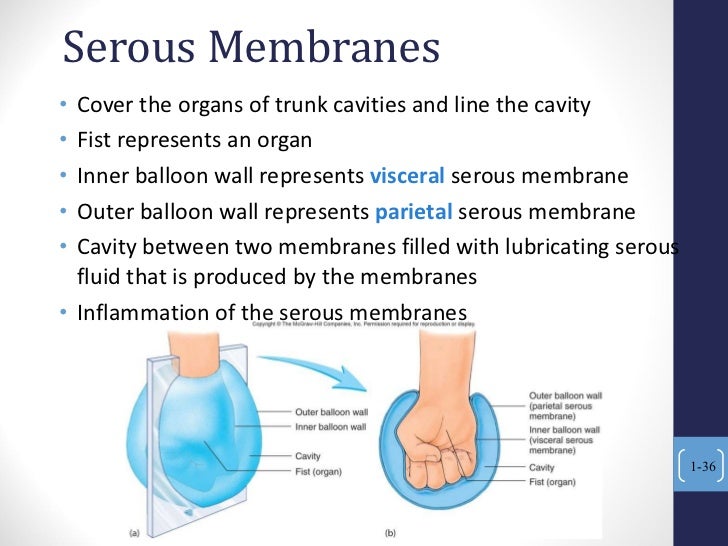
The Visceral Pleura Covers The Surface Of The Lungs, And The Parietal Pleura Covers The Inside Of The Thorax, Mediastinum, And Diaphragm.
(2) they are composed of epithelium and loose connective tissue. Serous membrane cavities — are lined by serous membrane — are normally empty (except for microscopic cells and a film of fluid) — function to preclude adhesions among organs, thereby allowing organs to move freely relative to one another. Serous membranes line and enclose several body cavities where they secrete a lubricating fluid which reduces friction from muscle movement.serous membranes are responsible for secreting serous fluids.
It Allows The Frictionless Movement Of The Heart And Lungs, As Well As The Organs Of The Abdominal Cavity.
Identify, serous membrane, number, 1. What are the most important functions of serous membranes? An internal visceral layer surrounds the organs, while a parietal layer forms the walls of the body cavities.